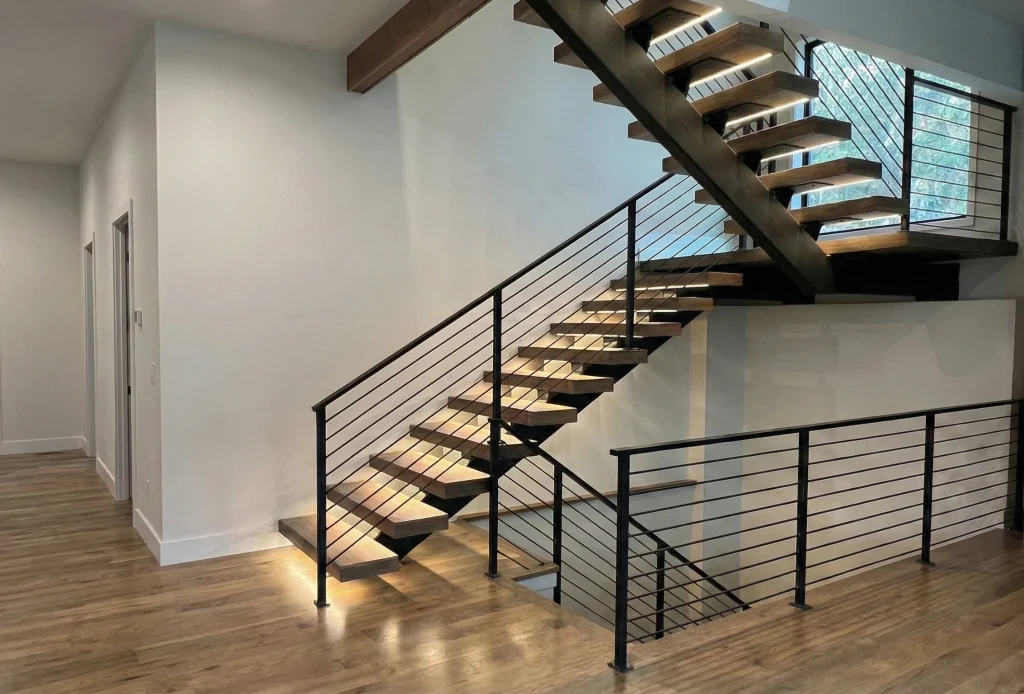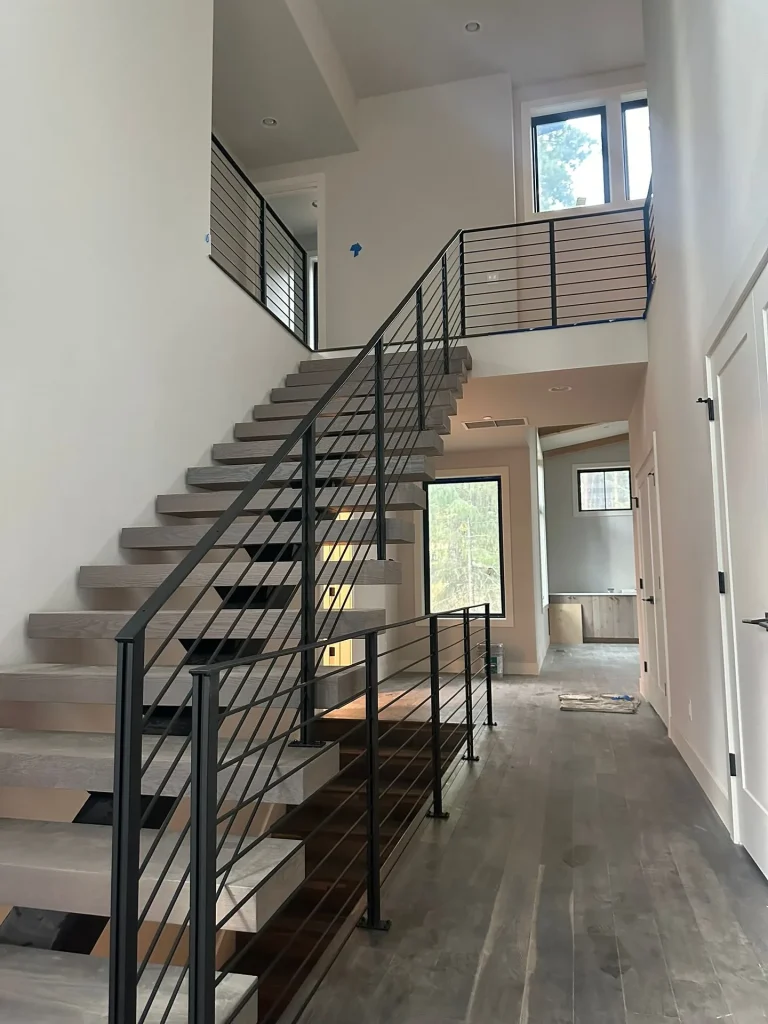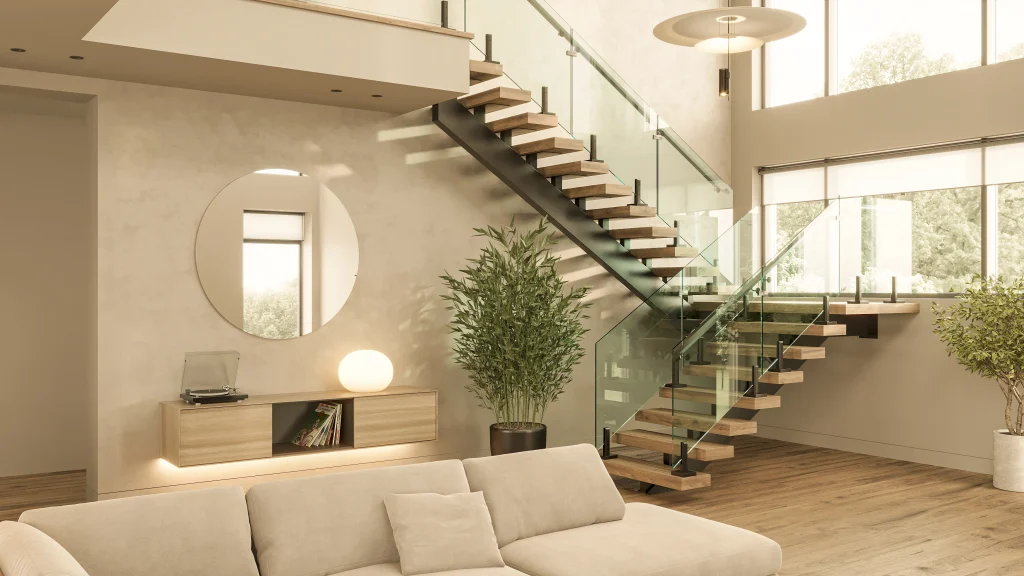
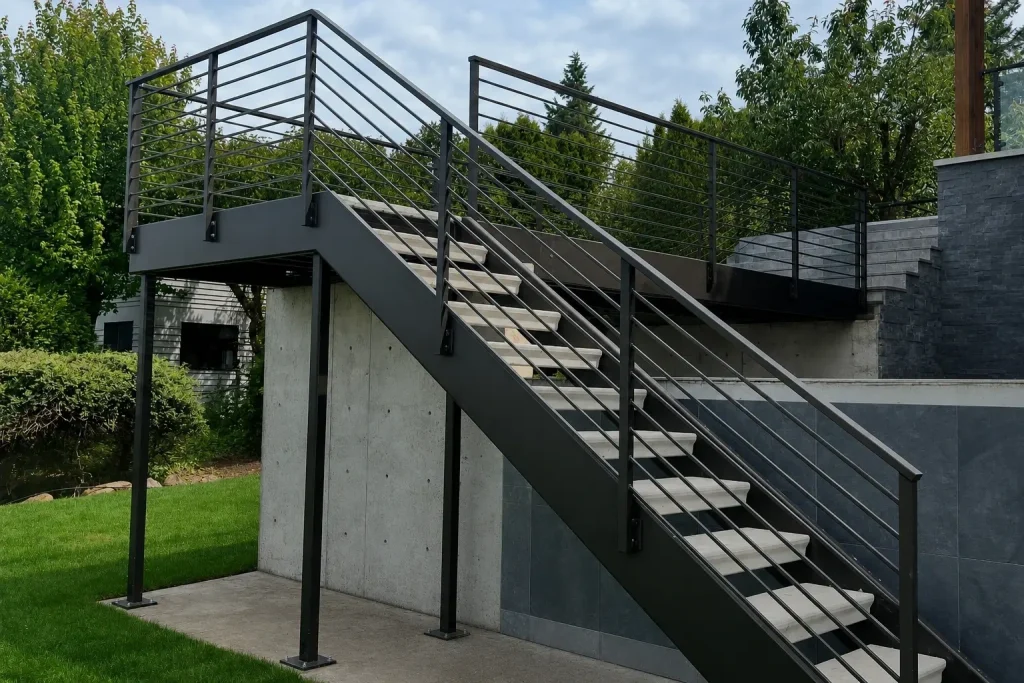
Custom exterior double stringer floating stairs in Bellevue, WA, fabricated by Floating Stairs Seattle and paired with matching exterior railings by Custom Railings WA for a modern residential outdoor living area.
A modern exterior stair system has to do more than connect two levels. It becomes part of the house itself. On sloped properties and homes with raised outdoor living areas, the stair layout, the railing pattern, and the visual weight of the structure all play a big role in how the exterior feels from the yard, patio, and upper deck.
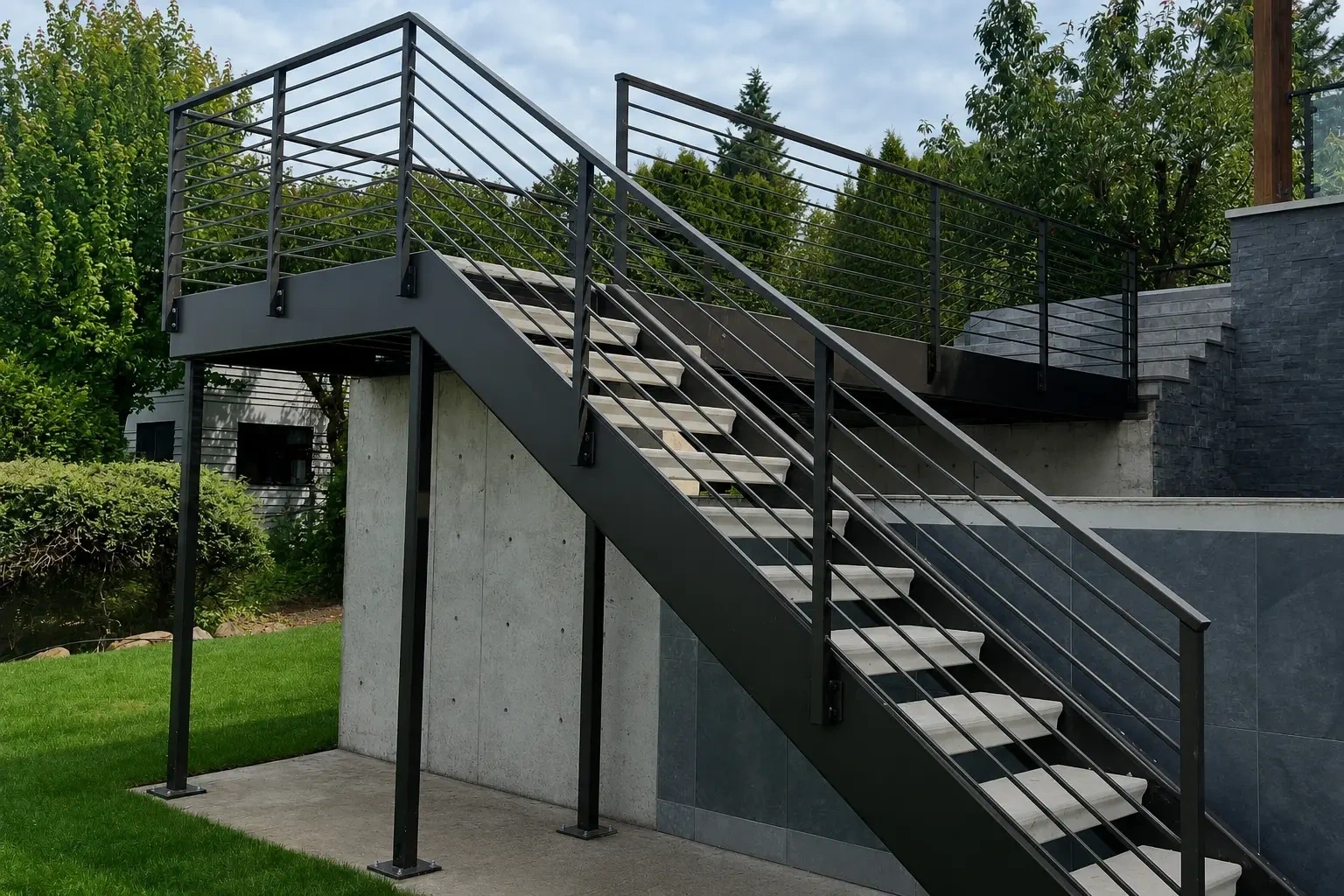
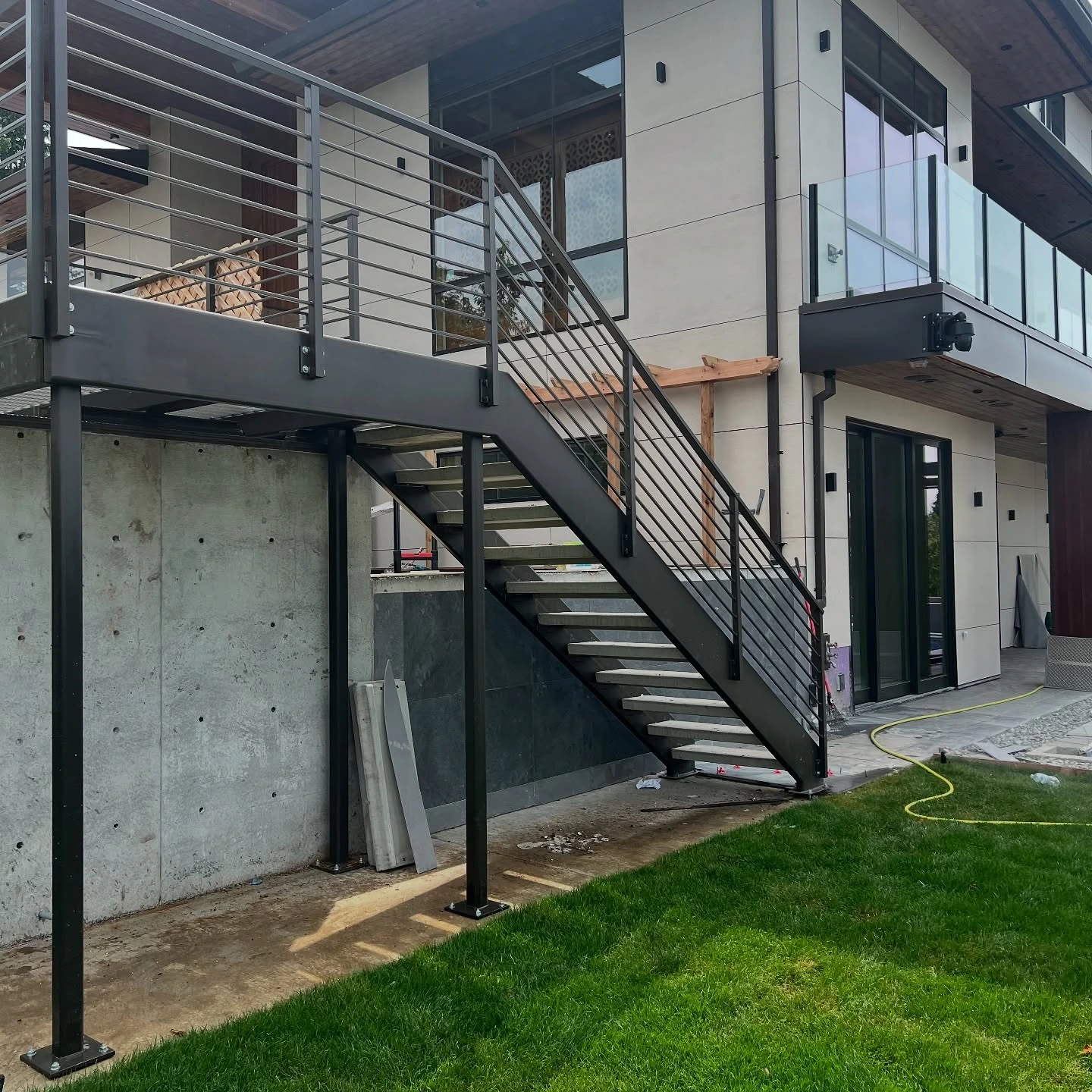
This Bellevue, WA project is a good example. The home features custom exterior double stringer floating stairs by Floating Stairs Seattle, paired with custom exterior railings by Custom Railings WA. The result is clean and direct. The stair run moves from the lawn level to the upper terrace in a single clear line, while the railings continue that same visual rhythm across the landing and deck edge.
Nothing in the composition feels heavy or crowded. The stairs read as part of the home’s architecture rather than an afterthought added later. That matters a lot on contemporary homes, where every exterior element is visible and the lines of the building are easy to read.
Why Exterior Double Stringer Floating Stairs Work Well Here
The basic layout is straightforward: a broad stair run rises from the lower grade to an upper outdoor level, with a landing that ties into the deck area. Even with a practical job like this, the form has a strong visual presence.
A double stringer stair style works especially well for exterior settings like this for a few reasons:
- It gives the stair a clear frame.
- It keeps the shape crisp and easy to read from a distance.
- It pairs naturally with open risers.
- It fits homes with strong horizontal and vertical architectural lines.
- It can look substantial without appearing bulky.
In this project, the side stringers define the stair in a bold way. The dark steel frame outlines the full run, while the open tread layout keeps more light and air moving through the space. From the lawn, the underside remains relatively open, which prevents the stair from turning into a large visual block.
That openness is a big part of why floating stair styles remain popular for modern homes. Even when the stair is built for outdoor use and has a strong frame, the open riser look keeps the structure lighter in appearance than a fully closed stair.
The Railing Design Plays an Equal Role
The railings are not just a safety element here. They are a major part of the visual language of the project.
This Bellevue home uses horizontal steel railings that continue across the landing and upper area. That choice works well with the house because the architecture already leans modern. Large glass areas, clean wall planes, dark trim, and broad overhangs all support a railing pattern with a long, linear look.
If a different railing style had been used, the feel of the project would shift quite a bit. For example:
- Vertical pickets would create a more traditional rhythm.
- Glass railing would make the deck edge look lighter and more transparent.
- Cable railing would read thinner and more technical.
- Decorative metal infill would bring in a stronger graphic pattern.
Here, the horizontal railings make sense because they echo the long lines already present in the home and the stair itself. They also create continuity between the stair run and the upper guardrail. That continuity matters. When the stair and railing systems feel related, the whole exterior reads as a single composition.
How The Stair Fits The House
Bellevue has a wide mix of residential architecture, though many higher-end neighborhoods feature contemporary homes, transitional builds, and large remodels with cleaner lines than older traditional houses. Exterior stairs on those homes often need to bridge grade changes while staying visually consistent with the rest of the property.
This project fits that setting well.
The house has a modern exterior with large openings, a restrained material palette, and clear massing. The stair structure follows that same discipline. The dark frame creates contrast against the lighter wall surfaces and concrete elements. That contrast makes the stair visible, though it still feels connected to the architecture.
The stair also works with the outdoor layout. It links the lower yard to the upper entertaining level in a direct and comfortable way. For homes with multiple outdoor zones, that kind of connection is important. A stair can easily feel awkward if the run is too steep visually, too narrow in appearance, or disconnected from the paths people actually use. In this case, the route feels intentional.
Why Open-Riser Exterior Stairs Have Such a Strong Visual Effect
Open-riser stairs tend to catch attention because they strip away visual bulk. You still see the frame and the treads, but there is less solid mass between them. That gives the stair a lighter profile.
For exterior projects, this can be useful in a few ways:
- The stair feels less imposing from the yard.
- The area beneath the stair remains more open visually.
- Light passes through the treads.
- The whole structure can feel more modern and architectural.
In this Bellevue project, the treads contrast clearly with the darker steel frame. That contrast makes the rhythm of the steps easy to see, even from a distance. It also breaks up the darker mass of the stringers, which helps the stair stay visually active instead of flat.
Get a Quote for Custom Floating Stairs by Floating Stairs Seattle
Tell us about your project in the Bellevue area. We will walk you through stair styles, railing options, and a real quote.
Contact Floating Stairs Seattle for a free consultation and estimate.
📞 Call us today at (425) 545-4777
📍 Visit our showroom in Kent, WA