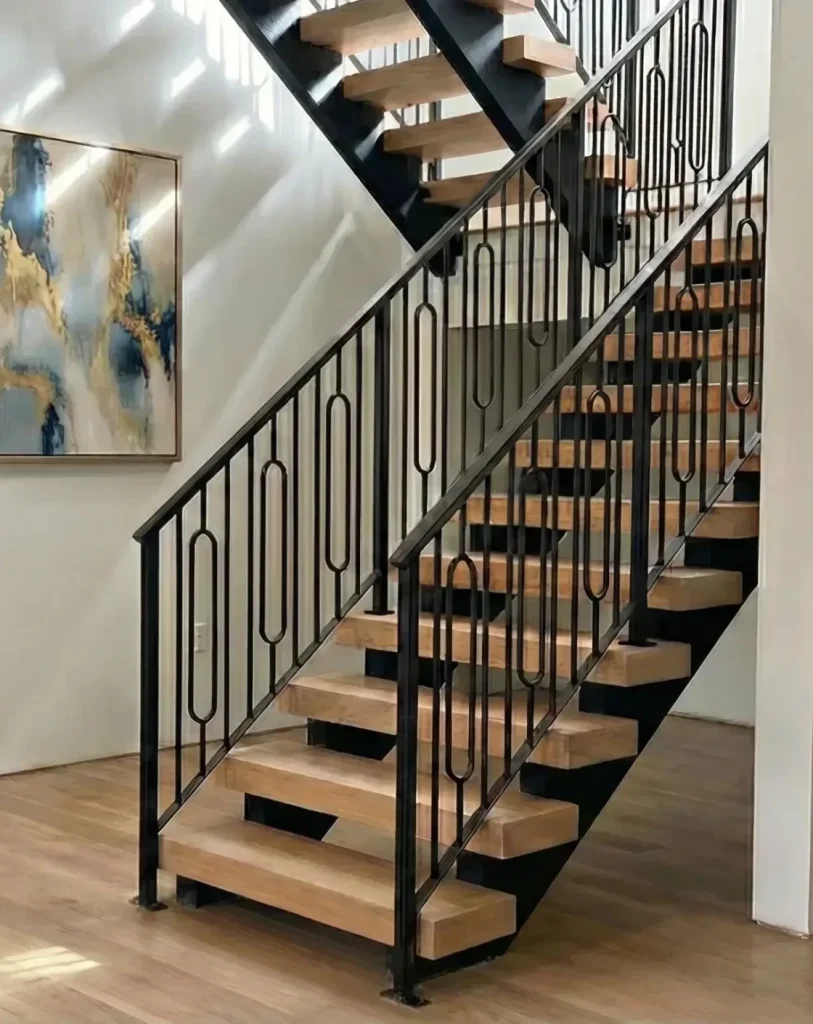
Double Stringer Stairs
Custom double stringer floating stairs engineered for wider runs, heavier daily traffic, and commercial-grade durability. Two welded steel beams, hardwood or concrete treads, and a rock-solid feel underfoot. Fabricated in our Kent shop and installed by our in-house crew.
What Is a Double Stringer Stair
Two Steel Beams, Maximum Strength
Local Fabrication
Every stringer welded, ground, and finished in our Kent shop
Excellent Reputation
Consistently top-rated by homeowners, builders & designers
Professional Showroom
Stop by to see samples in person, compare finishes, hardware and details, feel the materials, and confidently choose what fits your space.
Family of Companies:

Floating Stairs Types
Mono Stringer vs Double Stringer vs Cantilever
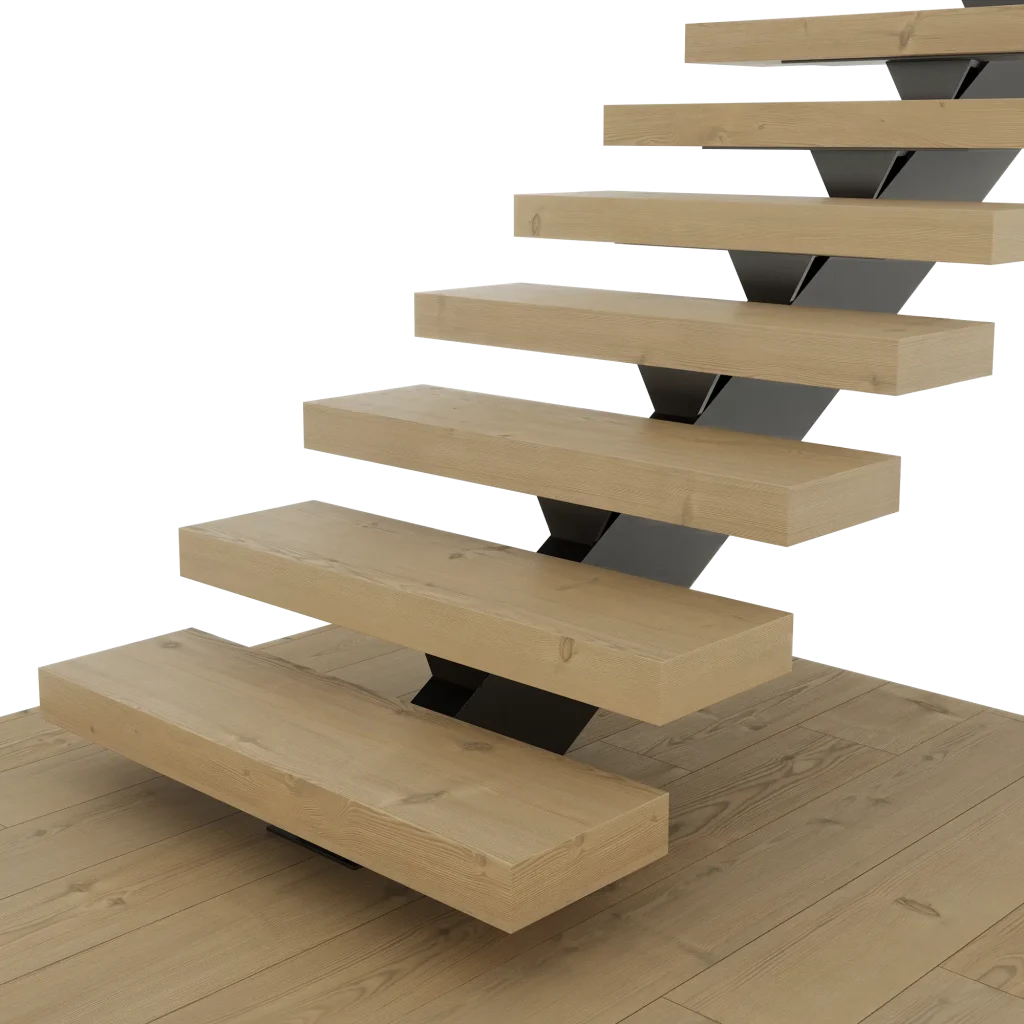
Treads are supported by one central steel stringer.
- Clean and modern profile
- Open feel with less steel
- Strong support for daily use
Best for modern spaces.
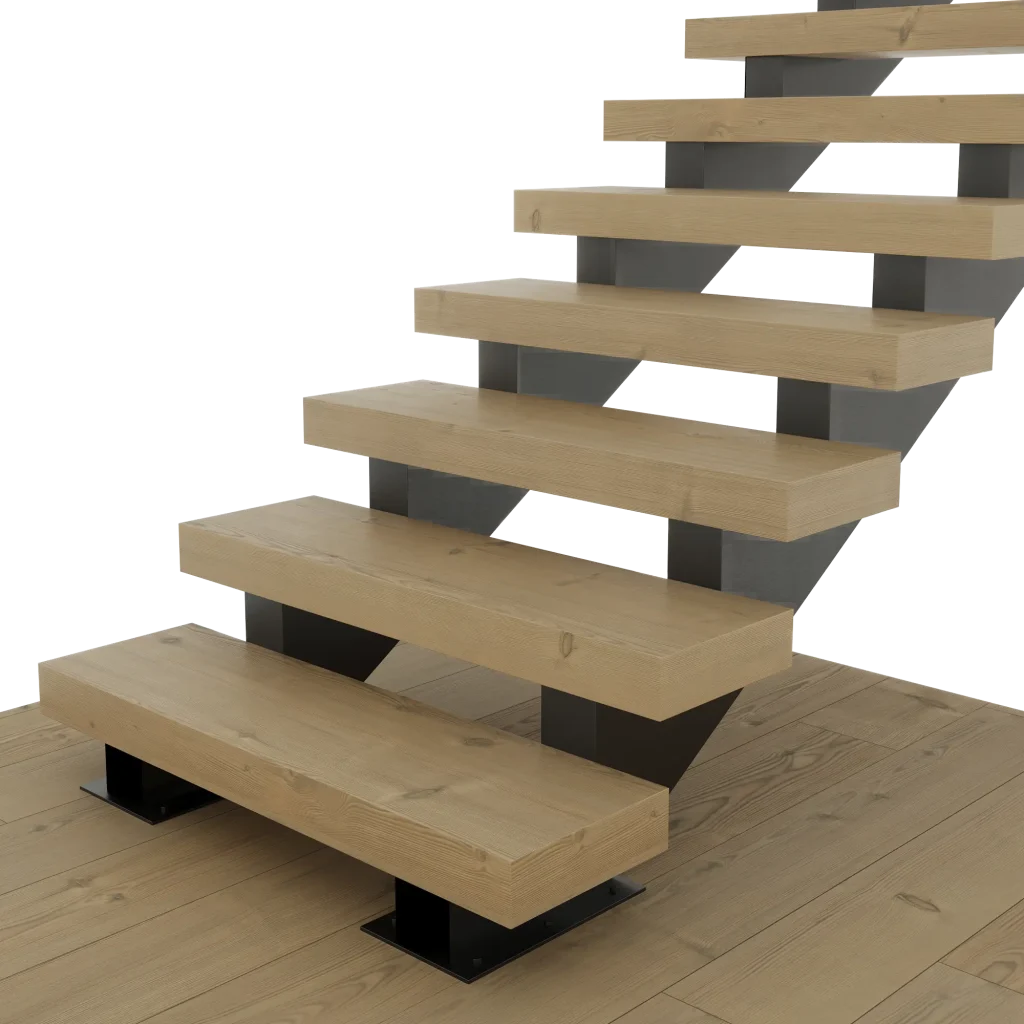
Treads are supported by two steel stringers.
- Very strong support system
- Great for wider stair runs
- Stable feel underfoot daily
Best for high-traffic spaces.
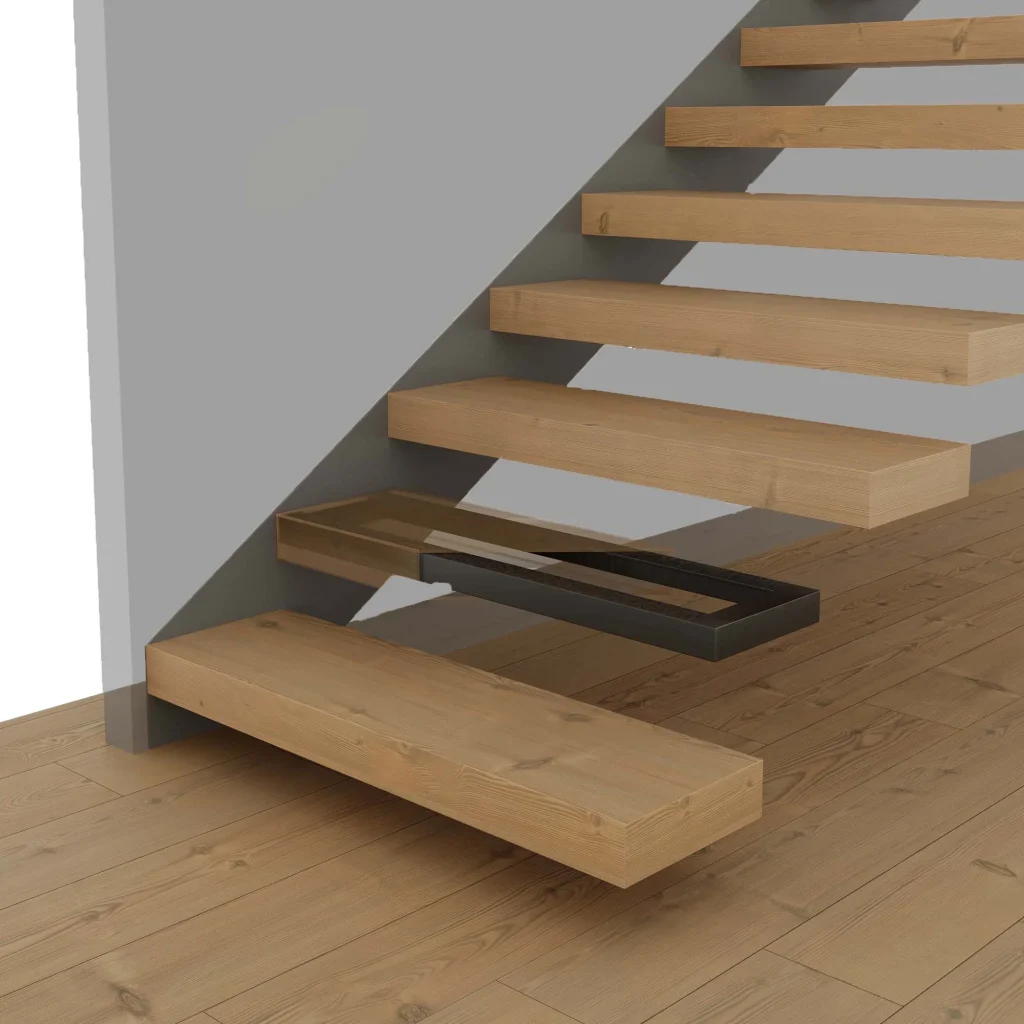
Treads are anchored into a structural wall support.
- True floating stair effect
- Minimal visible structure
- Most open appearance
Best for minimalist spaces.
Why Choose a Double Stringer Stair
Four Reasons Double Stringer Stairs Work So Well
Maximum Load Capacity
Tread Material Freedom
Supports heavier and thicker treads: slab hardwood, steel plate, concrete, mixed materials.
Commercial-Ready
Meets IBC live-load requirements for office, retail, restaurant, and multi-family use.
Sharper Visual Lines
Application Areas
Double Stringer Stairs Application
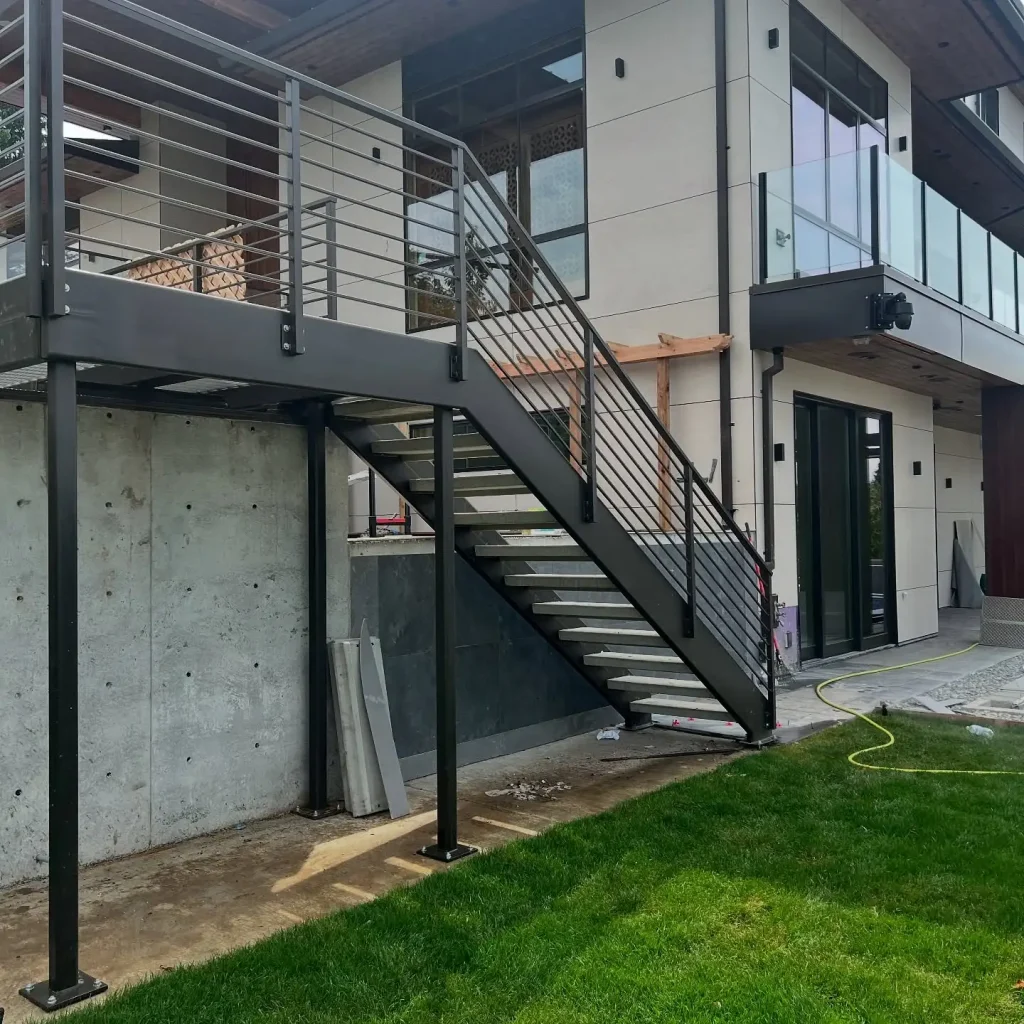
Double stringer floating stairs perform well in a wide range of projects across Seattle and the greater Puget Sound. Residentially, they are the right choice for wider family-home stair runs in West Seattle, Magnolia, Madison Park, and similar neighborhoods where the staircase is a focal element in a larger floor plan. They also work well in commercial-residential conversions, lofts, and any home where the stair sees regular heavy use. The two-beam structure carries the live load that commercial code requires while still giving the space a modern, open floating-stair appearance.
Quick Estimate
Stairs & Railings
Pair Double Stringer Stairs with Railings
by Custom Railings WA
The horizontal lines of a double stringer stair pair well with railings that echo the same modern geometry. Our sister company, Custom Railings WA, fabricates the railings for every staircase we build. The most popular pairings for double stringer projects are horizontal cable infill for an industrial-modern feel, frameless glass for commercial applications that need code-compliant guardrails without visual weight, and slim metal railings with horizontal infill bars for a residential mid-century aesthetic.
Areas Served
We Serve Cities Across the Puget Sound Region & Beyond
We design and install double stringer floating staircases throughout the Pacific Northwest.
FAQ
Double Stringer Stairs: Common Questions
What is a double stringer staircase?
How much do double stringer stairs cost?
Custom double stringer floating stairs we build in Seattle typically start at around $16,000 and run up to $35,000 or more, depending on width, length, tread material, steel finish, and railing system. Commercial projects with extra-wide runs, code-compliant guardrails, and premium materials sit at the upper end.
When should I choose double stringer over mono stringer?
Choose double stringer when the stair run is wide, when the space will see heavy daily traffic (commercial lobbies, offices, multi-family buildings), or when you want a thicker, more substantial visual feel underfoot. Mono stringer is better when minimum visible steel and the cleanest possible profile matter most.
Can double stringer stairs be used in commercial spaces?
Yes, double stringer floating stairs are well-suited to commercial applications. Their dual-beam structure carries higher loads than a mono stringer, which makes them appropriate for office build-outs, retail spaces, restaurants, multi-family buildings, and lobby installations where code requires higher live-load capacities and egress considerations.